Update2026.10.24 (토)

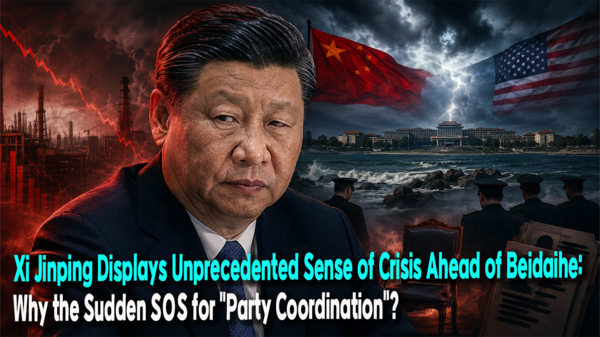
[Unofficial Coordination Opens Ahead of Three Major Challenges: Economic Slowdown, US-China Summit, Military Purges]
Ahead of his September visit to the United States and the 5th Plenary Session of the 20th Central Committee in October, Chinese President Xi Jinping is showing an unprecedented sense of crisis and signaling an urgent need for intra-Party coordination. The fact that President Xi has publicly expressed a sense of crisis is unusual in itself, and seeking advice from Party elders on how to resolve these issues is equally extraordinary, drawing significant attention.
The economy is faltering, crucial negotiations with the United States are approaching, and the purge of top military officials has remained unresolved for over six months. However, while Xi acknowledges the existence of these crises, he appears trapped in a political dilemma: he cannot alter the very policy direction that brought them about.
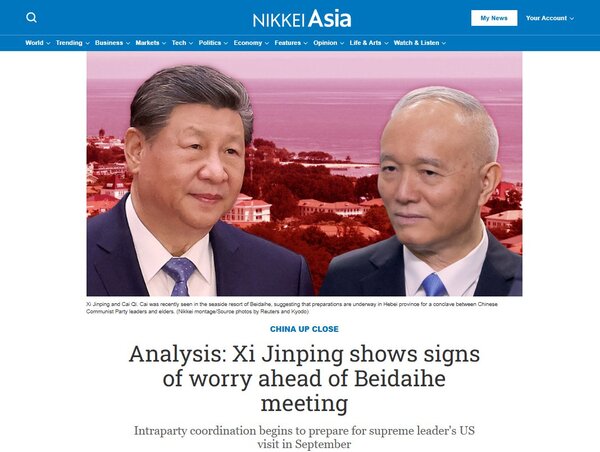
On August 6, Japan's Nikkei Asia reported: "President Xi Jinping expressed an unusual sense of crisis ahead of Beidaihe, calling for internal Party coordination on key issues such as economic management and foreign policy." The report noted that "behind-the-scenes coordination began unusually early ahead of the informal gathering between current leadership and retired elders, typically held in early August in Beidaihe."
Nikkei Asia continued: "In the background lies a series of major political events that the Xi administration must handle simultaneously. President Xi is scheduled to make an official visit to the U.S. in late September for a summit with U.S. President Donald Trump, followed by the 5th Plenary Session of the 20th Central Committee of the Communist Party of China (CPC) in October." President Trump previously stated in Washington last month that "President Xi is scheduled to visit the U.S. on September 24, and we plan to discuss artificial intelligence (AI) issues during the visit."
Given these heavy domestic and foreign policy agendas, the fact that exchanges of views with retired elders—who still exert political influence—began earlier than usual serves as evidence of the urgency felt by the Xi regime.
Of particular note, last year authorities announced investigations into Zhang Youxia, a powerful figure in the military, and Liu Zhenli, Chief of the Joint Staff Department of the Central Military Commission (CMC), for "serious violations of discipline and law." Zhang Youxia is classified alongside President Xi as a "second-generation revolutionary princeling" with deep connections to the elders group. Despite intense friction between Xi Jinping and Party elders over the sudden arrest and purge of these two top military figures, Xi bypassed the opposition and now urgently demands coordination and consultation with Party elders on critical pressing issues—a move that highlights the immense weight of the challenges he currently faces.
Beidaihe is not an official Party meeting. The Chinese government does not announce the gathering between leadership and elders as a formal decision-making process. However, as an informal venue where sitting leaders and retired elders exchange views and discuss major policy and personnel matters, it is regarded as a key indicator for reading the subtle shifts in Chinese power politics.
[Signal Flare: Cai Qi's Appearance at Beidaihe]
The first signal supporting this trend was captured on August 3. China's state broadcaster, CCTV, reported that evening that "Cai Qi, ranked fifth in the Politburo Standing Committee, visited Beidaihe in Hebei Province to meet with experts from various fields." Cai Qi is considered one of President Xi's closest confidants and entered the Politburo Standing Committee at the 20th Party Congress in autumn 2022. The Politburo, consisting of around 20 top officials including the seven Standing Committee members, serves as the Party's highest decision-making body.
Cai Qi has appeared in Beidaihe on August 3 for four consecutive years. While the composition of his entourage changes annually—this year accompanied by a Politburo member concurrently serving as head of the Party's Organization Department—Cai's appearance itself is widely recognized through state media as the signal marking the opening of the "Beidaihe Gathering." Beidaihe, a resort facing the Bohai Sea, is where active leadership and retired elders informally gather each summer to discuss key issues including personnel appointments and policies. Much of its coastline is designated exclusively for government officials, with access restricted to outsiders.
[Xi Asks Non-Party Figures for Economic Solutions]
A scene demonstrating Xi's sense of crisis more directly occurred on July 24 at a symposium held in Zhongnanhai, Beijing. Xinhua News Agency reported that "the symposium hosted by the CPC Central Committee was attended by leaders of the eight non-Communist 'democratic parties,' the head of the All-China Federation of Industry and Commerce, and representatives of personages without party affiliation, alongside all members of the Politburo Standing Committee including Premier Li Qiang, Wang Huning, Cai Qi, and Ding Xuexiang." Xinhua noted that "President Xi solicited opinions and suggestions regarding economic work for the second half of the year."
Xi requested attendees to provide feedback and proposals on economic management for the second half of the year, specifically calling for customized solutions based on thorough investigation and research. For a leader who has centralized all policy authority under the Party Central Committee and his personal stature since taking power, seeking concrete economic solutions from non-Party figures was an unexpected move.
Nikkei Asia commented: "For President Xi, who has been known for top-down decision-making across all matters since taking power in 2012, seeking counsel from outside figures by asking for 'tailored proposals based on sufficient research and investigation' is highly unusual." The outlet added: "Analysis suggests this indicates he has begun harboring concerns over public opinion outside the Communist Party and shifting situational dynamics."
[4.3% Growth: An Unbalanced Economy Sustained by Exports Alone]
The reason behind Xi's sensitive response to economic issues is clear. China's second-quarter Gross Domestic Product (GDP) grew by just 4.3% year-on-year. This represented a sharp deceleration from 5.0% in the first quarter and fell short of market expectations of 4.5%. It marks the lowest growth rate since the fourth quarter of 2022, when COVID-19 lockdown shocks were still reverberating.
An even more serious issue is internal economic imbalance. Reuters reported that "real estate development investment dropped sharply by 18.0% in the first half of the year, while the recovery in consumption and private investment lagged behind expectations." It added: "Conversely, June exports expanded significantly driven by overseas demand for AI and electric vehicles, highlighting a structure where exports prop up growth while domestic demand and real estate remain submerged."
Given China's ongoing trade friction with the United States and Europe, an export-dependent recovery lacks guaranteed sustainability. If the U.S. tightens high-tech controls and tariff pressure or if Europe raises protective barriers against Chinese electric vehicles and batteries, even the final pillar supporting the Chinese economy could waver.
[Acknowledged Crisis, But Rejected Policy Pivot]
Despite this, there are no signs that President Xi is preparing for a fundamental policy shift. The Politburo meeting held on July 30 stated that high importance must be attached to difficulties and challenges in economic operations, yet it reaffirmed existing lines favoring basic research support, AI governance, and high-tech industry development. This signifies a commitment to double down on state-led advanced manufacturing rather than implementing massive remedies to revive real estate and private consumption.
Xinhua reported that "the meeting called for strengthening stable support for basic research and improving AI governance systems, stating that while 'great importance must be attached to economic operational difficulties and challenges,' one must 'maintain confidence and face challenges head-on.'"
Nikkei Asia analyzed: "This stands in contrast to the sense of crisis President Xi displayed on July 24," pointing out that "political calculations are at play." Specifically, "if the Xi regime embarks on a bold policy pivot, it would effectively be admitting past policy errors, which could spark demands for a total leadership shuffle and generational turnover at the Party Congress scheduled for 2027."
Indeed, last week's Politburo meeting designated the agenda for October's 5th Plenary Session as "Full and Rigorous Self-Governance of the Party (全面从严治党)." This is interpreted as a move to reinforce his governing legitimacy by highlighting anti-corruption achievements. The South China Morning Post (SCMP) noted: "Given that this 5th Plenary Session takes place one year ahead of next year's Party Congress, it will serve as a bellwether for gauging a large-scale leadership overhaul and President Xi's potential fourth term."
[Unresolved for Half a Year: The Handling of Zhang Youxia Remains a Hot Potato]
Another issue casting a shadow over Beidaihe is the purge at the highest levels of the military. China's Ministry of National Defense announced in January that "Zhang Youxia, Vice Chairman of the Central Military Commission, and Liu Zhenli, Chief of the Joint Staff Department, are under investigation for serious violations of discipline and law." However, half a year later, no specific investigation results or disciplinary measures have been disclosed.
The investigation into these two figures stems from an extension of the large-scale purge among top People's Liberation Army (PLA) leadership conducted ahead of the 4th Plenary Session of the 20th Central Committee last autumn. Yet six months after the announcement, investigation findings remain unpublished, and last week's Politburo statement made no mention of either official.
Rumors circulating suggest that when Zhang Youxia reportedly attempted to leverage military power, Party elders intervened to delay action by proposing an honorable exit path for Xi Jinping. Taking advantage of this pause, Xi's loyal forces launched a sudden arrest of Zhang. Now, with Party elders strongly opposing severe punishment for Zhang, President Xi remains unable to decide on his final disposition. The key question is whether the handling and severity of punishment for Zhang Youxia and Liu Zhenli will be decided before the October 5th Plenary Session after consultations with elders during this summer's Beidaihe meeting.
[Why Times Insight]
What warrants attention at this year's Beidaihe gathering is not rumors of Xi Jinping's downfall or unverified power struggles. The true core issue is that a leader who built absolute power acknowledges a crisis to the extent of seeking external advice, yet remains unable to change the policy path he created.
Slowdown in economic growth, real estate depression, summit talks with President Trump, and the handling of Zhang Youxia and Liu Zhenli may appear as separate issues, but they ultimately converge into a single question: To what extent can Xi Jinping modify his power and policies to resolve this crisis?
The answer revealed so far is negative. President Xi is seeking advice while refusing to admit policy failures, and attempting coordination without relinquishing centralized power. Ultimately, this year's Beidaihe is unlikely to be a venue where Xi chooses a new path, but rather a stage testing how effectively he can contain internal and external discontent to maintain his existing course.
A leader who acknowledges crisis yet cannot change direction—that very contradiction is the greatest crisis currently facing the Xi Jinping regime.
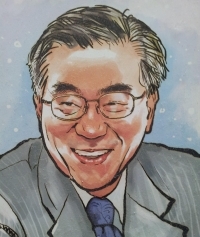
-중국 푸단대학교 한국연구원 객좌교수
-전 EDUIN News 대표
-전 OUR NEWS 대표
-제17대 대통령직인수위원회 정책기획팀장
-전 대통령실 홍보기획비서관
-사단법인 한국가정상담연구소 이사장
-저서: 북한급변사태와 한반도통일, 2012 다시우파다, 선거마케팅, 한국의 정치광고, 국회의원 선거매뉴얼 등 50여권