
Update2026.10.24 (토)

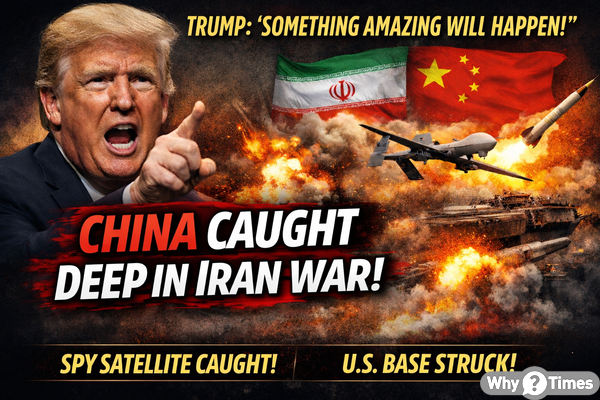
[Trump’s ‘Grand Bargain’ Teased… Islamabad 2nd Meeting Moves Fast]
U.S. President Donald Trump has signaled the resumption of a second round of negotiations to end the war with Iran, declaring that the end of this week will be an "amazing two days" that will determine the direction of the Middle East conflict. Meanwhile, U.S. Central Command (CENTCOM) announced that Iranian maritime trade has come to a "complete standstill" following the blockade of the Strait of Hormuz. Tension is escalating as evidence emerges that Iran utilized Chinese intelligence satellites to target U.S. military bases, confirming China's active involvement in the Iran war.
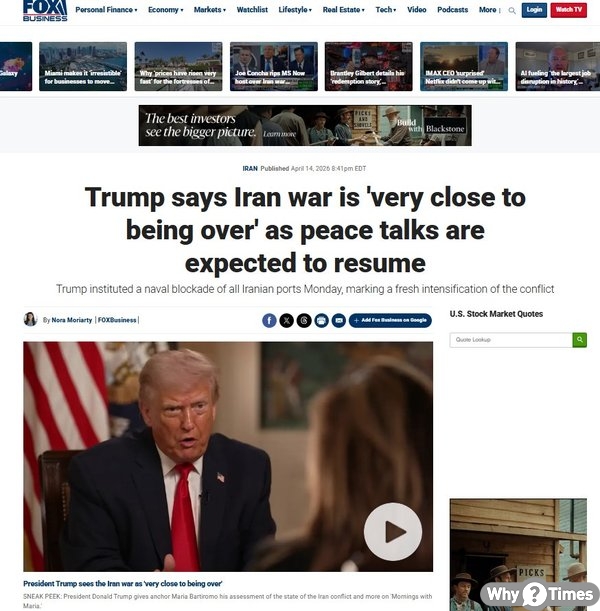
On the 15th, FOX Business reported, “President Donald Trump offered an optimistic outlook, suggesting that the war with Iran has effectively entered its final stages.” The report quoted Trump as saying, “I think it’s almost over. I think we’re very close to it being over.”
In an interview with the New York Post, Trump specifically pointed to Islamabad, Pakistan, stating, “Something could happen in the next two days. There’s a good chance we’ll be going there.”
Furthermore, Trump emphasized to ABC News reporters, “There are going to be an amazing two days ahead,” and added, “There is no need to further extend the current two-week ceasefire.” This reflects his strong resolve to reach a peace agreement within the ceasefire period, strongly suggesting that high-level face-to-face negotiations between the U.S. and Iran could resume as early as the 16th. Beyond a simple cessation of hostilities, Trump seeks a practical end-of-war agreement that allows Iran to begin full-scale national reconstruction.
U.S. diplomatic circles report that back-channel contacts with Iran have remained active even after the collapse of the first round of talks. Should the second round take place, the U.S. delegation is expected to be led by Vice President JD Vance, alongside Middle East Envoy Steve Witkoff and Trump’s son-in-law Jared Kushner. Trump has reportedly tasked this "core trio" with crafting a "Grand Bargain"—a diplomatic exit strategy that goes beyond a mere halt to armed conflict.
[Clash Between Uranium Enrichment and the 'Grand Bargain']
The primary point of contention in the upcoming negotiations is expected to be the cessation of Iran’s uranium enrichment and its duration. In previous talks, both sides agreed on the general premise of halting the nuclear program but differed sharply on the timeline. The U.S. demanded a long-term suspension of at least 20 years, while Iran countered with a much shorter period of around five years.
Vice President Vance recently stated at an event, “The President wants a Grand Bargain, not a small deal,” making it clear that the administration will push for high-intensity conditions to fundamentally eliminate the Iranian nuclear threat. This is interpreted as part of Trump’s ‘Big Deal’ strategy: requiring Iran to completely abandon nuclear capabilities tied to the regime's survival in exchange for guaranteed reintegration into the international community and economic reconstruction.
Notably, Israel’s stance, previously skeptical of negotiations, appears to be shifting. Israel and Lebanon have agreed to continue direct ceasefire talks for the first time in 33 years since 1993. Although the cessation of actual combat with Hezbollah (rather than the regular Lebanese army) remains a variable, Israel’s willingness to engage in dialogue is seen as a signal supporting the U.S.-led push for peace. This reduces the burden of regional conflict, allowing the U.S. to focus on the final showdown with Iran.
[Maritime Blockade and Iran’s Choice]
Parallel to diplomatic efforts, the U.S. continues to exert military and economic pressure. The U.S. is currently implementing a "reverse blockade," cutting off all vessel traffic from Iranian ports. This is a powerful countermeasure to Iran’s attempt to block the Strait of Hormuz, designed to choke off the regime’s funding.
CENTCOM stated, “The blockade of Iranian ports has been perfectly implemented as the U.S. military maintains overwhelming maritime superiority in the Middle East.” General Brad Cooper, Commander of CENTCOM, specified that with total command of the sea, the U.S. has successfully blocked all commercial flow into and out of major Iranian ports.
However, the door to dialogue remains open. The Wall Street Journal (WSJ) reported that “more than 20 commercial vessels passed through the Strait of Hormuz in the last 24 hours, suggesting both sides are exploring the possibility of easing tensions ahead of negotiations.” Bloomberg also reported that Iran is considering temporary flexibility regarding the shipping halt to maintain momentum for talks with the U.S.
[Iran Uses Chinese Spy Satellites for Precision Strikes on U.S. Bases]
Amidst these developments, it has been revealed that the Islamic Revolutionary Guard Corps (IRGC) secretly acquired spy satellites from China to monitor U.S. bases and set targets for precision strikes across the Middle East.
The Financial Times (FT), citing classified Iranian military documents, reported: “The IRGC Aerospace Force secretly took delivery of the ‘TEE-01B’ satellite launched from China in late 2024. The satellite, manufactured by the Chinese firm ‘Earth Eye,’ was transferred to the foreign client after reaching orbit.” Analysis of time-series coordinates and imagery shows that Iranian leadership used this satellite to surveil key U.S. facilities, which played a crucial role in assessing conditions before and after drone and missile attacks in March.
The FT noted that the satellite photographed Prince Sultan Air Base in Saudi Arabia for three days starting March 13. President Trump confirmed that U.S. aircraft at that base were hit, with five Air Force tankers damaged. The satellite also focused on locations targeted by the IRGC, including Muwaffaq Salti Air Base in Jordan, the U.S. 5th Fleet base in Bahrain, and Erbil Airport in Iraq.
Nicole Grajewski, an Iran expert at Sciences Po, pointed out that because the satellite is operated directly by the IRGC Aerospace Force rather than a civilian space program, it is clearly for military use. The ‘TEE-01B’ offers a resolution of approximately 0.5m, which is ten times more precise than Iran’s domestic ‘Noor-3’ satellite.
The FT further reported that the IRGC agreed to pay approximately 250 million yuan (approx. $35 million USD) for the system in September 2024, a deal that included access to a ground station network provided by Beijing-based Emposat.
While China claims these are private companies operating for peaceful purposes, experts argue that satellite launches and ownership transfers are impossible in China without government approval. A former Western intelligence official stated, “It is very clear that China is providing sophisticated assistance to Iran while masking government involvement.”
The White House has avoided specific comments, but President Trump recently warned, “China will face serious problems if it provides air defense systems to Iran.” Additionally, U.S. intelligence is reviewing reports that China may have shipped man-portable missiles to Iran. If true, this would mark a significant tactical shift in Beijing’s support for Tehran. There are also strong suspicions of military cooperation via satellite navigation, with claims that Iran is using China’s ‘BeiDou’ system instead of the U.S. GPS to guide its drones and missiles.


-중국 푸단대학교 한국연구원 객좌교수
-전 EDUIN News 대표
-전 OUR NEWS 대표
-제17대 대통령직인수위원회 정책기획팀장
-전 대통령실 홍보기획비서관
-사단법인 한국가정상담연구소 이사장
-저서: 북한급변사태와 한반도통일, 2012 다시우파다, 선거마케팅, 한국의 정치광고, 국회의원 선거매뉴얼 등 50여권