
Update2026.10.24 (토)

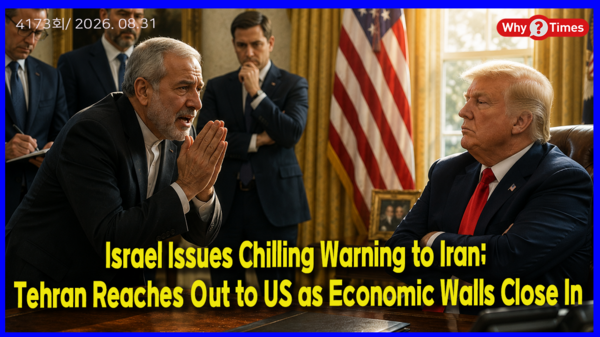
[Israel’s Chilling Warning: "Agreement with Them Is Impossible"]
While Israel fires stark warnings toward Iran, signals are emerging from Tehran urging a return to negotiations with the United States. Washington announced the removal of Iranian naval mines placed along international routes in the Strait of Hormuz. Coupled with a dual naval blockade and tightened financial sanctions, Iran's foreign trade dropped 35% while annual inflation surged to 66%. Tehran now seeks a diplomatic exit by attempting to revive the June Memorandum of Understanding (MOU) framework, but the Trump administration refuses to talk, intensifying economic pressure instead. Left with limited military options, a weakening economy, and no path to restore previous terms, Iran faces a shrinking set of choices.
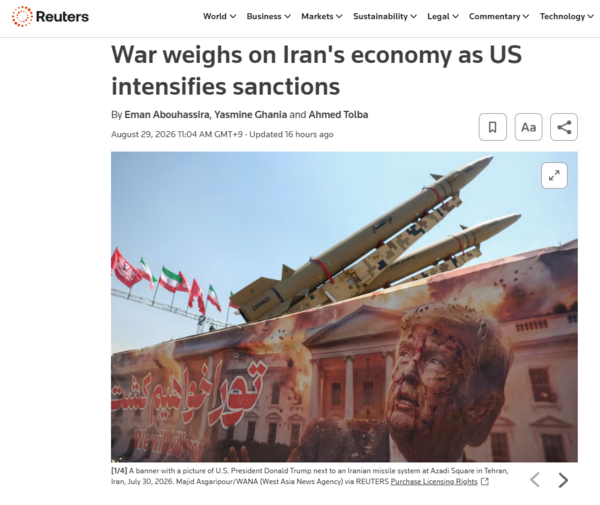
Reuters reported on August 29 that Israel's posture is driving further pressure on Iran. Israeli Prime Minister Benjamin Netanyahu recently disclosed discussions with President Trump, expressing deep skepticism over reaching any deal with Tehran’s leadership. While stating he would not oppose a "good deal," Netanyahu heavily criticized Iranian leaders, signaling to Trump that negotiating with them is virtually impossible.
More ominously, Netanyahu warned that if a US-Iran agreement fails, military options remain active. He cautioned that any Iranian attack on Israel would trigger an "unimaginable blow." Simultaneously, he backed a third option: surrounding Iran and amplifying economic sanctions—publicly endorsing the Trump administration's aggressive policy. For Tehran, stalled negotiations mean accumulating economic strain alongside the looming threat of further Israeli military strikes.
[Tehran Counter-Proposes: "Let’s Return to Diplomacy"]
Despite the hostility, Tehran is sending back-to-back signals favoring diplomacy. Iran International reported that Iranian Foreign Minister Abbas Araghchi met with Qatari Prime Minister Sheikh Mohammed bin Abdulrahman Al Thani in Tehran, stating that if Washington shifts its approach, putting diplomacy back on track remains achievable. The message aims to keep doors open without appearing to capitulate to US pressure.
Regional actors are stepping in. According to Reuters, Qatar's Prime Minister visited Tehran to emphasize reopening the Strait of Hormuz to pre-war operational status. Both Qatar and Pakistan are active in mediating a diplomatic reset. While Iran publicly denies that US pressure is effective, its diplomatic maneuvering reveals a desperate search for an exit strategy from a prolonged conflict.
[Iran’s Ultimate Goal: Restoring the June MOU]
Tehran’s preferred starting point is the restoration of the June MOU. Under that framework, Washington permitted limited Iranian oil sales, allowing President Masoud Pezeshkian's administration to export roughly 90 million barrels. That framework, facilitated by Qatari and Pakistani mediation, broke down over disputes regarding the Strait of Hormuz.
Trump, however, refuses to regress to prior terms. The Wall Street Journal noted that stalled talks stem directly from Trump’s refusal to honor the June preliminary deal. Instead, Washington shifted to combining naval blockades with "Operation Economic Outcast" to maximize leverage.
On August 27, Trump explicitly told reporters at the White House: "We don't want to talk to them. We are not trying to meet," adding that active negotiations are non-existent. The White House maintains that economic pressure will persist until Tehran agrees to meaningful concessions. Tehran wants old conditions restored; Washington is imposing heavier leverage to dictate entirely new terms.
[Why Diplomacy Now? The Hormuz "Mine Card" Fails]
Developments in the Strait of Hormuz heavily influence Iran’s push for diplomacy. Admiral Brad Cooper, Commander of US Central Command (CENTCOM), stated on August 28 that US forces successfully cleared naval mines deployed by the Islamic Revolutionary Guard Corps (IRGC) along international shipping lanes. Navy divers, Navy SEALs, and air assets conducted minesweeping operations, securing international passage routes.
US actions extend beyond mine removal. CENTCOM reported facilitating the transit of approximately 1,500 merchant vessels carrying nearly 750 million barrels of crude oil. Conversely, since resuming the naval blockade of Iranian ports in mid-July, US forces have blocked Iranian crude exports by sea. Washington’s explicit goal is keeping international shipping open while shutting down Iranian oil sales.
Full normalization remains distant. Maritime transit data from August 28 shows vessel traffic well below historical averages, accompanied by ongoing attacks. The IRGC dismissed US claims of an open strait as a "blatant lie," insisting no ship passes without Iranian authorization. While physical mine blockades were neutralized, naval escalation risks remain active.
[The Real Threat: Tehran’s Dollar Liquidity Is Drying Up]
Economic devastation poses a greater existential threat to Tehran than immediate military strikes. President Pezeshkian admitted that sanctions and naval blockades reduced Iran's total foreign trade by approximately 35%. Reuters reported that annual inflation reached 66%, forcing top leadership to demand immediate government intervention against skyrocketing prices, unemployment, and market instability.
Washington is simultaneously choking Iran's international banking channels. US authorities warned third-party states and financial institutions of secondary sanctions. Measures are underway to cut off dollar-clearing access for Banque Misr’s UAE branch over transactions linked to Iran, prompting an emergency probe by the UAE Central Bank. US strategy has expanded from blocking crude exports to systematically dismantling Tehran’s access to physical foreign currency.
[Target on Netanyahu’s Son: A Hidden Front Behind Negotiations]
Amid high-stakes diplomacy, intelligence friction escalated. Israel’s domestic security agency, Shin Bet, confirmed a "significant threat" against Prime Minister Netanyahu’s son, Yair Netanyahu. Following risk assessments, Shin Bet ordered his immediate return to Israel from Florida.
Netanyahu publicly claimed Iran attempted to assassinate one of his sons, with Israeli media corroborating suspicions of an Iranian plot. However, Shin Bet’s official statement to the Times of Israel omitted specific details regarding the threat's origin. While Netanyahu attributes the threat to an Iranian plot, official intelligence statements verify only the existence of a severe threat without formally naming the sponsor.
[Why Times Insight: Iran’s True Enemy Is Time]
Iran’s primary adversary is neither Washington nor Jerusalem—it is time. Tehran maintains strategic choices: leveraging Hormuz, enduring sanctions through shadow trade, or negotiating. Yet, every card has lost leverage over time.
US forces largely neutralized the mine threat in Hormuz while executing simultaneous naval blockades and severe financial isolation. Foreign trade collapsed by 35% as inflation hit 66%. Meanwhile, Trump rejects reverting to the June MOU, seeking to reset baseline negotiating costs entirely.
Israel's stance compounds Tehran's dilemma. Netanyahu warned of severe retaliation if Iran attacks again. If negotiations collapse completely, Tehran faces both economic asphyxiation and kinetic military strikes.
Iran’s dilemma is clear: negotiating now forces acceptance of worse terms; waiting further degrades economic survival; military escalation invites direct conflict with the US and Israel. The key metric is no longer whether Iran will negotiate, but how long it can insist on June terms before accepting Washington’s harsher demands.
This standoff has evolved into a war of attrition. Iran must endure economic drain and naval containment, while Washington manages global oil price stability and allied strain. While regime collapse is not guaranteed, prolonged delay exponentially raises Tehran's costs. Time is no longer on Iran's side.

-중국 푸단대학교 한국연구원 객좌교수
-전 EDUIN News 대표
-전 OUR NEWS 대표
-제17대 대통령직인수위원회 정책기획팀장
-전 대통령실 홍보기획비서관
-사단법인 한국가정상담연구소 이사장
-저서: 북한급변사태와 한반도통일, 2012 다시우파다, 선거마케팅, 한국의 정치광고, 국회의원 선거매뉴얼 등 50여권