
Update2026.10.24 (토)

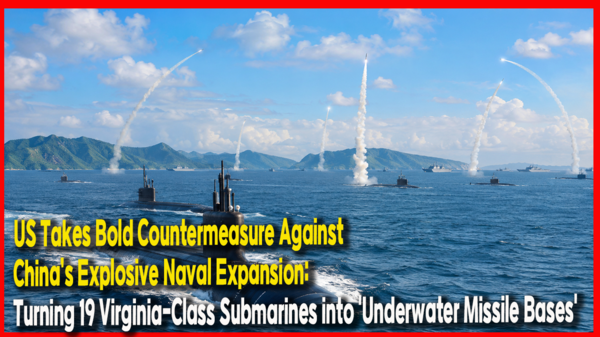
[Firepower Distribution as Countermeasure to Rising Chinese Submarines… Aiming Inside the First Island Chain]
The U.S. Navy has begun fundamentally altering how it prepares to fight potential conflicts against China in the Pacific. In response to the upcoming retirement of its Ohio-class guided-missile submarines, the Navy officially decided to reclassify 19 Virginia-class attack submarines equipped with the Virginia Payload Module (VPM) as guided-missile submarines (SSGN). While firepower per vessel will decrease compared to the Ohio class, the number of submarines and missile launch axes that China must simultaneously track will increase significantly. This marks a strategic transition from concentrating a massive salvo of 154 missiles on a single platform to a distributed underwater strike architecture dispersing up to 40 missiles across multiple hulls.
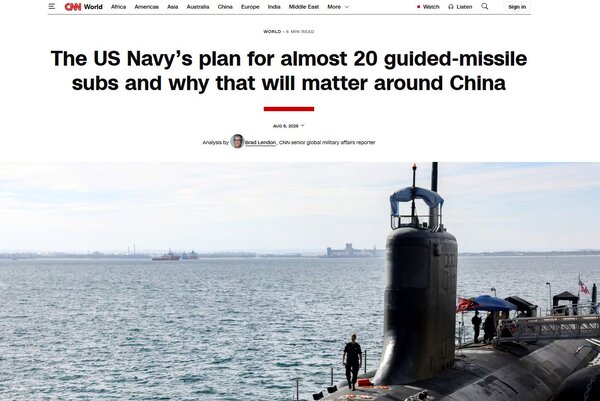
CNN reported on August 8 that the U.S. Navy's reclassification and deployment plans for the 19 Virginia-class submarines serve as a "decisive pivot" demonstrating how Washington intends to address future conflicts in a Pacific rapidly transformed by China's military expansion. CNN noted that the Navy changed more than just vessel designations—it signaled a new undersea warfare doctrine designed to covertly penetrate inside China's Anti-Access/Area Denial (A2/AD) network during a Taiwan Strait contingency to neutralize radars, command posts, and missile bases first.
[China’s Submarine Shipbuilding Outpaces US… Alarm Bells Sound in Washington]
Behind the U.S. Navy’s decision lies the explosive expansion of the People's Liberation Army Navy (PLAN). The International Institute for Strategic Studies (IISS) highlighted that between 2021 and 2025, China launched 10 submarines totaling 79,000 tons, whereas the U.S. delivered only 7 submarines totaling 55,500 tons over the same period. China has surpassed the U.S. in both vessel count and total tonnage displacement during that span.
The IISS further observed that while the U.S. maintains superiority in total nuclear submarine inventory, acoustic stealth, and long-range operational expertise, China possesses not only nuclear submarines but also the world's largest surface fleet alongside roughly 46 conventional submarines. The IISS added that while China expanded its Huludao Shipyard in Liaoning Province to boost nuclear submarine production capacity, the U.S. delivers Virginia-class submarines at a rate of only 1.1 to 1.2 per year—far short of its target of 2 per year. Consequently, America's traditional confidence in quality over quantity is facing strain in the face of this manufacturing gap.
Furthermore, the U.S. Department of Defense's (DoD) Military and Security Developments Involving the People's Republic of China report estimated that the PLA Rocket Force's missile inventory grew by approximately 50% over the past four years. The report detailed how Beijing has refined its strategy to push U.S. aircraft carriers and surface warships beyond the First Island Chain during a Taiwan Strait crisis, while attempting to neutralize ports, airfields, and logistics hubs in Japan, Guam, and the Philippines through large-scale missile strikes.
According to the DoD report, submarines represent Washington's primary solution to counter this threat. Submarines are among the few U.S. military assets capable of surviving for extended periods near or inside the First Island Chain, where Chinese satellite, radar, and anti-ship missile assets are heavily concentrated. Even if China manages to push surface aircraft carriers outward, completely detecting missile submarines hidden in the deep ocean remains a formidable challenge.
[Carrying Up to 40 Missiles… Surprise Strikes Inside China's Defense Perimeter]
Regarding this shift, Navy Times reported on August 4 that the vessels being reclassified as SSGNs consist of 19 Virginia-class Block V and Block VI submarines planned to feature the Virginia Payload Module (VPM)—an extended hull module measuring approximately 25.6 meters that adds four large vertical launch tubes. The report emphasized that this measure does not involve retrofitting existing Virginia-class boats or altering the mission profile of every future submarine.
Navy Times detailed that the 25.6-meter VPM section houses four large payload tubes. Each tube can carry seven Tomahawk cruise missiles, adding a total of 28 missiles. Combined with the 12 missiles launched from existing forward torpedo and launch systems, a single submarine can carry up to 40 Tomahawk-class weapons. When all 19 submarines are fielded, it establishes a distributed undersea strike capacity theoretically totaling up to 760 missiles.
Navy Times noted that the VPM is engineered to accommodate diverse payloads beyond Tomahawks, including the Conventional Prompt Strike (CPS) hypersonic weapon system and Large Displacement Unmanned Undersea Vehicles (LDUUVs). Firing hypersonic weapons from waters close to targets drastically reduces the adversary's detection, decision-making, and interception windows.
Sidharth Kaushal, a senior research fellow at the Royal United Services Institute (RUSI), analyzed that submarines hidden inside China's defense perimeter could eliminate radar facilities, command-and-control centers, and missile targeting systems first. Such preemptive strikes would degrade China's anti-ship capabilities, thereby opening a path for U.S. aircraft carriers and surface ships to advance inside the First Island Chain.
[From 154 Concentrated Salvos to 40 Distributed Salvos]
This reorganization is directly linked to the upcoming retirement of the U.S. Navy's four Ohio-class SSGNs. Converted from ballistic missile submarines (SSBNs) to cruise missile submarines during post-Cold War force restructuring, each Ohio-class SSGN carries up to 154 Tomahawks, representing the world's largest conventional submarine strike capacity on a single platform.
However, CNN pointed out that the first vessel, USS Georgia, has entered the inactivation process, with the remaining three scheduled to be phased out over the coming years. The U.S. submarine industry has warned that the retirement of the Ohio-class SSGNs could temporarily reduce the Navy's total undersea missile capacity by nearly 60%.
According to CNN, the maximum missile capacity of a single Virginia-class SSGN equals roughly 26% of an Ohio-class submarine. Replacing the firepower of one Ohio-class vessel requires approximately four Virginia-class submarines. Furthermore, while Ohio-class SSGNs utilize dual crews (Blue/Gold) to maintain extended operational presence, Virginia-class boats generally operate on a single-crew rotation. Increasing hull numbers alone cannot immediately duplicate the sustained presence of the former force structure.
Nevertheless, distribution offers distinct strategic advantages. By spreading firepower across multiple submarines rather than concentrating it in a single vessel, the overall strike network remains functional even if individual hulls are detected or forced to disengage. For China, this vastly multiplies the number of submarine targets and potential launch origin points to monitor, making it far more difficult to disable U.S. undersea firepower in a single stroke.
[The Primary Challenge: Time — First Vessel in 2029, Completion by 2038]
The most critical vulnerability lies in the timeline for delivering replacement forces. Navy Times reported that under current Navy schedules, the first VPM-equipped submarine, USS Arizona (SSGN 803), is scheduled for delivery in Fiscal Year 2029. Full deployment of all 19 Block V and Block VI SSGNs is projected around 2038. Navy Times clarified that this action represents an official reclassification reflecting the enhanced strike roles of VPM-fitted hulls rather than a brand-new design program.
[Why Times Insight]
This reclassification is far more than an administrative change renaming 19 hull codes from SSN to SSGN. It serves as an official declaration that the U.S. Navy is shifting away from a concentrated architecture reliant on 154 missiles per Ohio-class vessel toward a Pacific-oriented combat force structure that disperses up to 40 missiles across numerous Virginia-class submarines positioned throughout the First Island Chain.
In a Taiwan Strait scenario, China's goal is to deny access to U.S. aircraft carriers early in the conflict. Washington's counter-strategy is to insert stealthy missile submarines inside that blockade network to destroy China's eyes, ears, command nodes, and missile arrays, paving the way for carrier strike groups to maneuver inward. China’s 'Anti-Access' strategy is met by America’s 'Undersea Infiltration and Distributed Strike' doctrine.
However, the ultimate success of this strategy hinges on execution timelines rather than reclassification labels. The critical factor is whether the U.S. can build all 19 submarines on schedule, integrate hypersonic weapons and unmanned systems in a timely manner, and bridge the temporary firepower gap caused by the retirement of the Ohio class. As China continues its rapid pace of submarine production and missile expansion, the most scarce strategic asset for the United States is neither submarines nor budget—it is time.

-중국 푸단대학교 한국연구원 객좌교수
-전 EDUIN News 대표
-전 OUR NEWS 대표
-제17대 대통령직인수위원회 정책기획팀장
-전 대통령실 홍보기획비서관
-사단법인 한국가정상담연구소 이사장
-저서: 북한급변사태와 한반도통일, 2012 다시우파다, 선거마케팅, 한국의 정치광고, 국회의원 선거매뉴얼 등 50여권