
Update2026.10.24 (토)

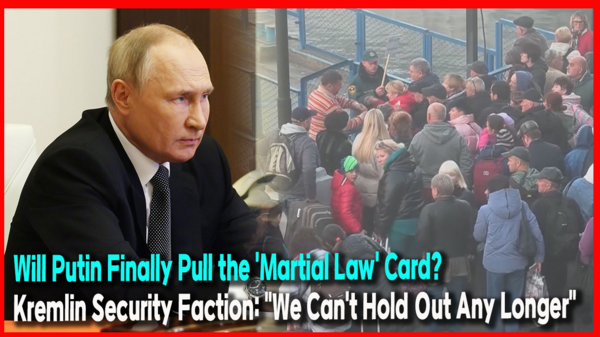
[Kremlin Security Line: "The Whole Country Must Go to War"]
Russia's policy of separating the war from citizens' daily lives—maintained for over four years—has hit its limit. As Ukrainian drones penetrate deep into the Russian rear, including Moscow, and as both troop recruitment and national finances falter simultaneously, voices within the Kremlin's security apparatus have begun arguing for the introduction of martial law, or elements of it, following the State Duma elections in September. As reports of election postponement and additional mobilization leak through separate sources, analysts suggest the Putin regime has reached a stage where it can no longer mask the impact of war under the label of a "special military operation." Of course, a declaration of martial law has not yet been decided. However, the very fact that this card is being discussed as a real option inside the Kremlin reveals how desperate Russia’s situation has become.
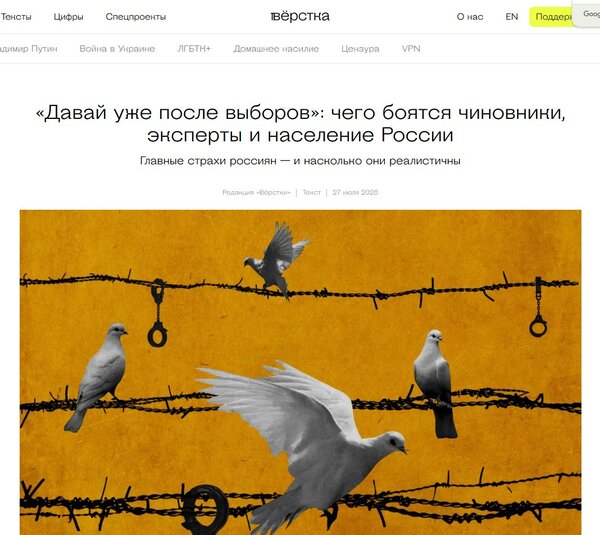
Russian independent news outlet Verstka recently reported, citing federal and local government officials, Duma faction leaders, and political consultants collaborating with the Kremlin: "Proposals to introduce martial law or elements of it across Russia following the September State Duma elections are being discussed within the government."
Verstka added, "In particular, hardliners among the siloviki—those from the military, intelligence agencies, and law enforcement—are said to be arguing for abandoning the policy of insularly shielding citizens from the war and transitioning to a system where 'the entire country fights together.' A source collaborating with the Kremlin noted that serious failures on the front lines or a breakdown in troop replenishment could serve as the trigger for introducing martial law."
A source in the Duma also confessed, "The situation in the country is growing increasingly grave," adding, "It may be difficult to maintain balance without extreme measures." Literally, a sense of crisis has erupted from the Kremlin’s security lines, signaling that "we can no longer endure using existing methods."
Martial law is not merely a curfew measure. Once President Putin declares martial law and receives approval from the Federation Council, restrictions on movement, bans on public gatherings, media and internet censorship, suspension of activities by political parties and civic organizations, requisitioning of private facilities, and forced labor related to national defense become legally permissible. Depending on the scenario, the election schedule could also be affected. Given Russia's current power structure, the likelihood of the Federation Council rejecting Putin's decision is virtually non-existent. Ultimately, martial law could serve as a legal umbrella for a "total mobilization system" that binds personnel, labor, private assets, and information under a single chain of command.
[To Hold the Elections, or Postpone Them Altogether?]
The possibility of martial law did not emerge out of nowhere. Russian independent media outlet Meduza reported in June that following the escalation of Russia's drone defense issues, the leadership of the Federal Security Service (FSB) and Viktor Zolotov, head of the National Guard (Rosgvardia) and Putin's former bodyguard, have been attempting to persuade officials to postpone the Duma elections.
Meduza noted, "The backdrop was the declining approval rating of the ruling United Russia party," adding that "even in surveys by Russian state polling agencies, support for United Russia dropped to the mid-30% range, while internal FSB surveys reportedly showed even lower figures." However, the Kremlin's default scenario to date remains holding the elections as scheduled.
Why, then, is the post-election period considered dangerous? The Putin regime has a history of announcing unpopular decisions immediately after elections. The partial mobilization order in September 2022 was declared just ten days after local elections concluded. This is why concerns are rising that the regime may first secure political legitimacy by engineering a victory for United Russia before pulling out unpopular measures like martial law or additional mobilization.
At present, the Kremlin appears to be weighing three scenarios simultaneously: strengthening control after holding elections as scheduled; postponing the elections altogether citing security concerns; or incrementally introducing specific elements—such as censorship, movement restrictions, and additional mobilization—step-by-step instead of declaring formal martial law.
[Resort Tragedy Shatters the Myth of a 'Safe Russia']
A critical trigger making these discussions so sensitive is that Ukrainian drones have breached the daily lives of Russian citizens. Meduza reported that "on the 3rd, a drone crashed onto a beach in Arkhipo-Osipovka, a Black Sea resort town in the Krasnodar Krai region of Russia, killing seven people—including three children—and injuring about 40." It added, "While Russian authorities claimed it was an attack by Ukraine, the exact circumstances remain unconfirmed, as possibilities exist that the drone lost control due to Russian air defense fire or electronic jamming."
What matters is the psychological impact this incident left on Russian society. The Times (UK) noted, "The Putin regime had previously packaged the war in Ukraine as a limited military operation taking place beyond its borders," adding that "the implicit social contract between the Kremlin and the Russian middle class was that citizens should support the military, but did not need to surrender their daily lives to the war."
The Times explained, "However, as Moscow's airports and oil refineries repeatedly grind to a halt and children die at Black Sea resorts, the myth that 'mainland Russia is safe' is collapsing," concluding that "Putin's governing formula—keeping the war detached from the public—has begun to falter."
[More Money Can No Longer Buy Troops]
The manpower shortages on the front lines are also fueling the martial law scenario. Janis Kluge of the German Institute for International and Security Affairs (SWP), based on an analysis of Russian federal and regional budget data, pointed out that "in the first quarter of this year, the average number of new contract soldiers joining the Russian military was about 800 per day—a decrease of approximately 20% compared to the same period last year." He noted, "While Russian regional governments continue to raise sign-on bonuses and various allowances, securing necessary troops purely through financial compensation is becoming increasingly difficult." Kluge added that "the fiscal burden on regional governments is reaching its limit," and that "while the possibility of additional mobilization is being discussed as a core variable for the autumn political landscape, a final decision has not yet been made."
Regarding this, Reuters observed that "if martial law is introduced, the Kremlin will be able to push through additional mobilization and movement restrictions much more forcefully." However, Reuters added, "This carries a high risk of re-triggering the massive exodus and social unrest seen during the partial mobilization of 2022. This is precisely why Putin has avoided nationwide martial law until now."
[Russia’s Coffers Strained Under War Costs]
Finances are also deteriorating rapidly. The Stockholm International Peace Research Institute (SIPRI) estimated "Russia's 2026 military expenditure at approximately 14.9 trillion rubles, representing around 6.3% of its Gross Domestic Product (GDP)." A structural reality has solidified in which the war swallows government budgets, industrial capacity, and manpower.
Reuters also reported that "in the first half of this year, the Russian federal budget deficit reached 5.73 trillion rubles, vastly exceeding the original full-year deficit target of 3.79 trillion rubles." It added, "While the Russian government expanded its annual deficit forecast to 4.83 trillion rubles, actual deficits are likely to balloon even further if additional spending occurs."
Reuters further noted, "To sustain the war, the government must simultaneously increase enlistment bonuses, casualty compensation, arms production costs, and rear-guard air defense deployment expenses," warning that "if oil and gas revenues along with the civilian economy cannot sufficiently support this, the burden will inevitably shift toward tax hikes, government bond issuances, welfare cuts, and the mobilization of private funds."
This is the fundamental reason martial law is being brought to the table. What the Kremlin desires is not simply controlling the streets, but a system that allows the state to forcibly channel scarce human resources, capital, and industrial facilities directly into the war effort.
[Why Times Insight]
Martial law is not a card played by a regime brimming with confidence. It is a mechanism of control evaluated at the final stage by a regime that has concluded it can no longer manage the front line, troop shortages, state finances, and public opinion through conventional means.
Of course, whether Putin will actually declare nationwide martial law remains uncertain. A formal declaration of martial law would mark the moment the regime forces the Russian public to acknowledge the reality of the war, destroying the "peaceful daily life" Putin long promised. Instead, the regime may choose to incrementally tighten additional mobilization, censorship, movement restrictions, and civilian economic controls without ever using the explicit label of "martial law."
The decisive period will be the September State Duma elections and the weeks immediately following. Whether Putin will proceed with the elections as planned and then roll out elements of martial law, or use attacks on mainland Russia as a pretext to postpone the elections and execute a full transition to a wartime economy, will determine Russia's next chapter.
One thing is clear: the fact that martial law is now being openly discussed within the Kremlin is not a sign of Russian strength. It is an alarm bell signaling that Putin's "special military operation" model can no longer hold out.
-중국 푸단대학교 한국연구원 객좌교수
-전 EDUIN News 대표
-전 OUR NEWS 대표
-제17대 대통령직인수위원회 정책기획팀장
-전 대통령실 홍보기획비서관
-사단법인 한국가정상담연구소 이사장
-저서: 북한급변사태와 한반도통일, 2012 다시우파다, 선거마케팅, 한국의 정치광고, 국회의원 선거매뉴얼 등 50여권