
Update2026.10.24 (토)

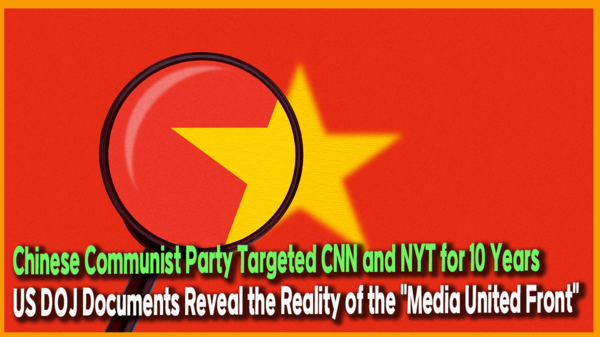
[From China-bound press trips and private dinners to lobbying firms—China's influence operations]
Official U.S. government documents showing how the Chinese Communist Party (CCP) has managed foreign media and expanded its influence are drawing renewed attention. While the CCP’s United Front operations have previously been known to center around politicians, academics, and business executives, U.S. Department of Justice (DOJ) records reveal that Chinese entities have systematically engaged with journalists from global news organizations over a long period. To be sure, inviting foreign journalists or hosting discussions is not illegal in itself. However, what has caught the attention of the U.S. government is that the entity behind these activities was the China-United States Exchange Foundation (CUSEF), an organization assessed to be linked to the CCP’s United Front strategy rather than a simple private entity.
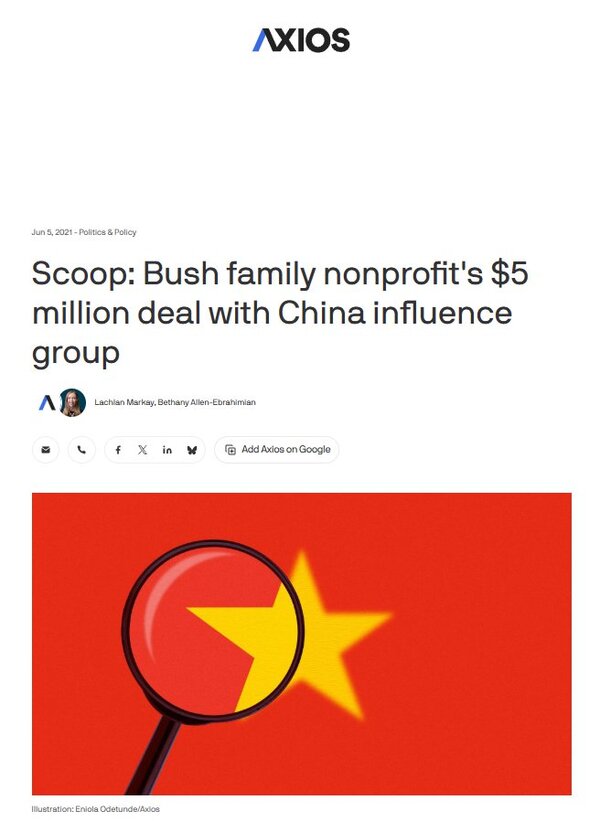
Axios, an American digital news outlet, reported shocking details: "CUSEF paid BLJ Worldwide (formerly Brown Lloyd James), a U.S.-based lobbying firm, approximately $20,000 per month, explicitly stating the goal to 'effectively disseminate positive messages to the media, key opinion leaders, and the general public.'" The report added, "To achieve this, BLJ registered its intent to organize and operate 'familiarization trips' to China for working journalists and journalism students. The filings record that in 2009 alone, four journalist delegation trips to China yielded 28 media reports, alongside securing 26 op-eds and 103 quotes in articles."
The individual who first uncovered this issue is Natalie Winters, an American investigative journalist. Since 2021, she has been tracking the Foreign Agents Registration Act (FARA) filings submitted to the DOJ by BLJ Worldwide, CUSEF’s U.S. lobbying firm. This past February, she compiled and re-released the details of these filings through her newsletter.
[The "Media Target Plan" Written in U.S. DOJ Filings]
The FARA filings carry significant weight because they are official documents submitted to the U.S. government, not mere allegations. According to the filings, CUSEF paid BLJ approximately $20,000 a month with the objective of "effectively communicating favorable messages to the media, key opinion leaders, and the general public."
To this end, BLJ regularly ran "Familiarization Trips"—a China travel program targeting journalists and journalism students. The 2009 filing notes that four trips hosted that year resulted in 28 media reports, 26 op-eds, and 103 quotes in articles. Because the program went beyond simple invitations to actively track and manage publication metrics, U.S. experts interpret it as a systematic strategy to expand influence.
[Beyond Trips to China, "Private Dinners" Continued]
In addition to inviting journalist delegations, private dinners were held repeatedly. Axios noted, "FARA filings record that representatives from major media organizations, including CNN, The New York Times, The Wall Street Journal, Reuters, AP, and Bloomberg, attended dinners held in New York and Washington, D.C."
Crucially, BLJ explicitly described the purpose of these events in the filings as "activities designed to secure the support of media leadership." Of course, these meetings do not inherently imply illegality. Foreign governments and international organizations routinely invite journalists. However, U.S. congressional committees and intelligence agencies view this case differently from standard media exchanges because they identify CUSEF as an organization linked to the CCP’s United Front strategy.
[At Least 120 Journalists Over 10 Years: A Long-Term Project Targeting the U.S. Media]
These activities were by no means one-off events. The National Pulse, a U.S. media outlet, analyzed the FARA filings and calculated that "between 2009 and 2018, at least 128 journalists and 48 media outlets participated in CUSEF-funded China trips or private dinners." InfluenceWatch, an organization that tracks political influence, similarly analyzed that "at least 127 journalists and 40 media outlets were identified."
While the exact figures vary slightly, the core fact remains unchanged: a sustained effort to build relationships with major U.S. media institutions spanned nearly a decade. This is precisely why U.S. observers view the case not as simple press exchange, but as a CCP "Influence Operation."
[Why CUSEF Stood at the Center of the Controversy]
The most critical element in this case is the identity of CUSEF. On the surface, CUSEF is a Hong Kong-based non-profit organization that promotes non-governmental exchanges between the U.S. and China. Its official founding purpose is to support academic exchanges and enhance mutual understanding between the two countries. However, the U.S. government and Congress have long refused to view the group as a simple private entity. CUSEF was founded by Tung Chee-hwa, the first Chief Executive of Hong Kong, who later served as Vice Chairman of the National Committee of the Chinese People's Political Consultative Conference (CPPCC).
The CPPCC is not a mere advisory body. Within the Chinese political system, the CPPCC is recognized as the core platform for the CCP's United Front Work Department. It serves as a vital pillar of the United Front strategy, which co-opts and manages individuals from various sectors outside the Party—including foreign nationals of Chinese descent, business communities, religious groups, and academia.
The U.S.-China Economic and Security Review Commission (USCC), a congressional advisory body, has also repeatedly identified CUSEF in its reports as one of the CCP's U.S.-facing execution arms for its United Front strategy. The USCC specifically analyzed that "CUSEF sought to create a favorable environment for China by broadly engaging not only the media but also U.S. universities, think tanks, former senior officials, and business executives." In short, accessing the media was just one facet of CUSEF's broader operations.
[Not Limited to the Press: Influence Expands into Politics and Academia]
Indeed, CUSEF's operational scope was remarkably broad. In 2021, Axios reported that CUSEF had pursued a funding agreement worth approximately $5 million with the George H.W. Bush Foundation for U.S.-China Relations.
Controversy also persisted across American university campuses. In 2018, the University of Texas at Austin decided to reject donations from CUSEF after Senator Ted Cruz raised concerns regarding the foundation's ties to the CCP. This case demonstrates that the U.S. political establishment views CUSEF not as a simple international exchange group, but as an organization intertwined with the CCP's strategy to expand its influence.
[Is It Illegal, or Is It an Influence Operation?]
A crucial distinction must be made here. What the FARA documents verify is that CUSEF engaged with U.S. journalists over a long period through China travel programs and private dinners; they do not provide evidence that specific media outlets or journalists wrote articles under the direct orders of the CCP.
FARA does not ban activities conducted on behalf of foreign governments or organizations; rather, it is a system designed to ensure such activities are transparently disclosed to the public. Therefore, the fact that BLJ and CUSEF submitted these filings means they followed legal procedures. Furthermore, programs where foreign governments or international organizations invite foreign reporters to introduce local sites are common practice in the international community.
Nevertheless, the reason U.S. congressional and intelligence bodies are paying close attention is that official documents contain circumstances showing the CCP attempted to manage foreign media as targets for securing long-term influence. The media plays the role of monitoring power in a democratic society. U.S. experts argue that if the press continuously maintains close ties with a specific government and accepts various conveniences, issues regarding media independence and conflicts of interest can naturally be raised, independent of the actual reporting content.
Moreover, the CCP has long pursued the acquisition of "discourse power"—shaping international public opinion and perceptions to its advantage—as a core national strategy. From this perspective, Western intelligence agencies share the assessment that building long-term relationships with foreign media holds weight far beyond simple international exchange, which explains why the U.S. remains vigilant.
[Is South Korea an Exception?]
This case cannot be viewed solely as an internal U.S. issue. The CCP’s United Front strategy does not target a single specific nation; its goal is to expand long-term influence across entire societies and countries directly tied to China's national interests. U.S. congressional and intelligence agencies have consistently analyzed that the targets are broad, encompassing politics, academia, businesses, think tanks, and overseas Chinese communities, alongside the media.
It is difficult to view South Korea as an exception. Within the South Korean media landscape, instances of journalists visiting China at the invitation of the Chinese central or local governments, or entities linked to them, have not been uncommon. To be sure, conducting on-site reporting via invitations from foreign governments is not inherently problematic. Governments worldwide run programs to invite foreign journalists to introduce their countries.
The real issue is the independence of the reporting. In an environment where the coverage schedule, routes, interviewees, and provided information are largely determined by the hosting institution, there is a risk that the messages desired by the host may be reflected more heavily in the articles rather than diverse perspectives. Consequently, the international press often discloses potential conflicts of interest when participating in such programs or strictly applies internal standards to preserve editorial independence.
Crucially, the CCP has long developed the "United Front" not as mere external public relations, but as a core tool of national strategy. A common analysis among Western intelligence agencies is that because it is difficult to alter the international order through military or economic power alone, China operates under the judgment that changing public opinion and perception yields greater long-term effects.
If so, the media should be in the primary position to monitor these very influence operations. If the press itself becomes the target of an influence operation and fails to maintain a critical distance, the oversight function of a democratic society will inevitably weaken. This is precisely why the FARA documents are drawing significant renewed attention in American society.
[Why Times Insight]
The U.S. DOJ FARA documents do not serve as evidence that specific media outlets like CNN or The New York Times were "bought out" by the CCP. However, the case holds substantial significance because it demonstrates that the CCP views foreign media as critical targets of its United Front strategy and has systematically built long-term relationships to that end.
In today's geopolitical arena, competition between nations is not decided by military or economic might alone. Who leads public opinion, information, and international perception has also become a critical strategic asset. This explains why China has long pushed "discourse power" as a national strategy.
South Korea cannot afford to view this issue as someone else's problem. While the media must continue foreign reporting and international exchanges, it must simultaneously safeguard the independence and objectivity required to withstand the influence operations of any nation. The moment the media loses its inherent role of monitoring power, the first thing to crumble is not a single news article, but the very credibility of the information citizens trust and rely upon. This is the true warning delivered by the FARA documents.
-중국 푸단대학교 한국연구원 객좌교수
-전 EDUIN News 대표
-전 OUR NEWS 대표
-제17대 대통령직인수위원회 정책기획팀장
-전 대통령실 홍보기획비서관
-사단법인 한국가정상담연구소 이사장
-저서: 북한급변사태와 한반도통일, 2012 다시우파다, 선거마케팅, 한국의 정치광고, 국회의원 선거매뉴얼 등 50여권