
Update2026.10.24 (토)

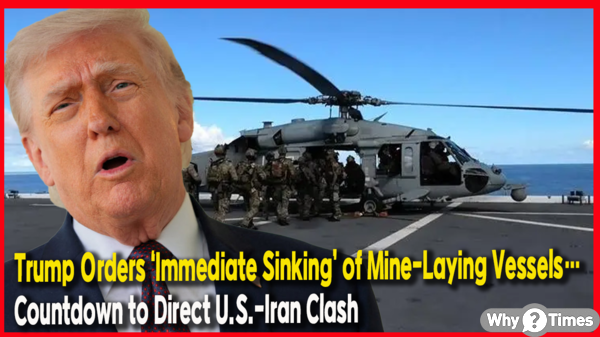
[U.S. Retaliates Immediately Following IRGC’s Forced Seizure of Vessels]
The crisis of armed conflict between the two nations is reaching its peak as U.S. President Donald Trump issued a hardline command to the U.S. Navy to "sink immediately and without hesitation" any vessels involved in the Iranian Revolutionary Guard Corps' (IRGC) mine-laying operations in the Strait of Hormuz. Amidst this, Israel stated it is preparing to resume war with Iran while awaiting a "green light" from President Trump, and reports have emerged from within Iran that the war-ending negotiation team has ultimately resigned. Consequently, it can be said that the situation is entering a second phase of war involving the U.S. and Israel.
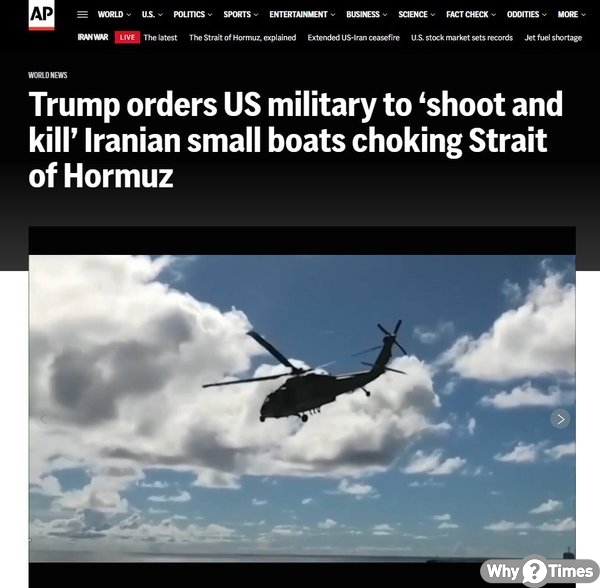
On the 24th, AP News reported, “President Trump stated in a post on his social media platform ‘Truth Social’ that ‘I have ordered the U.S. Navy to shoot and kill any vessel, no matter how small, that installs mines in the waters of the Strait of Hormuz.’” The report added that he emphasized, “There must be no hesitation,” and noted that U.S. minesweepers are currently conducting mine-clearing operations in the strait.
President Trump further claimed, “I order these activities to continue, but to triple in scale,” and asserted that “all 159 Iranian naval vessels have been sunk and lie at the bottom of the sea during U.S. military operations against Iran.”
This sinking order is a direct follow-up to the incident on the 22nd, where the IRGC seized two international merchant ships in the Strait of Hormuz and fired upon a third vessel without warning, damaging its bridge. The IRGC seized the MSC Francesca and the Epaminondas, and fired upon the Euphoria, rendering it unable to sail. The Iranian side claimed these vessels violated maritime navigation regulations, manipulated tracking systems, and operated without necessary permits. However, this incident was interpreted as a deliberate show of force by Iran, occurring immediately after President Trump announced an extension of the ceasefire. Gholam-Hossein Mohseni-Eje'i, head of the Iranian judiciary, wrote on X (formerly Twitter) on the 23rd, “The display of power shown by the armed forces of Islamic Iran in the Strait of Hormuz is a source of pride,” and mocked the U.S., saying it “lacks the courage to approach the strait.”
However, the U.S. view is that Iran's actions are nothing more than the petty behavior of a local gang. In retaliation, the U.S. military seized another "stateless" vessel linked to Iran on the 23rd. CBS News reported on the 23rd, “One day after the seizure incident, the U.S. Department of Defense additionally seized the Guinea-flagged tanker ‘Majestic X’ linked to Iran in the Indian Ocean,” and “Video was released showing U.S. soldiers boarding the deck of the vessel, which was discovered in the waters between Sri Lanka and Indonesia in the Indian Ocean.”
CBS News continued, “According to ship-tracking data, the Majestic X was in almost the same area where the tanker Tiffany, previously seized by the U.S. military, was found, and it was sailing toward Zhoushan, China.” It stated, “This vessel previously operated under the name ‘Phonix’ and was placed on the sanctions list by the U.S. Treasury in 2024 for violating sanctions against Iran.”
[Israeli Defense Minister: “Ready to Resume War with Iran”]
In the meantime, Israel has completed preparations for a full-scale attack, awaiting final approval from the Donald Trump administration to resume high-intensity military operations targeting Iran's national infrastructure and strategic strongholds.
The Jerusalem Post reported on the 23rd, “Israeli Defense Minister Israel Katz declared after a security situation review meeting that ‘Israel is ready to resume the war with Iran.’” It reported that “The Israeli military is currently waiting for the ‘green light,’ the signal of approval from the U.S., and made it clear that the ultimate goal of this operation lies in the complete termination of the Khamenei regime.” Regarding this, Minister Katz explained, “The Israel Defense Forces (IDF) have completed all preparations for both offense and defense, and the setting of strike targets has already been completed.”
On this day, Minister Katz criticized the “Iranian Islamic regime for being hell-bent on suppressing its own citizens by mobilizing the Revolutionary Guard and the Basij militia.” He pointed out that “The Iranian leadership is using ‘energy extortion’ tactics by threatening to raise global oil prices,” while exposing the reality of the regime's top leadership. Katz criticized, “Iranian leaders are currently hiding in tunnels, experiencing difficulties in communication and decision-making,” and added, “Even though Iran’s airspace is completely open and all national infrastructure and strategic facilities are exposed to attack, they are making false claims of victory.”
In particular, regarding the nature of future IDF attacks, Minister Katz suggested they would possess a level of destructive power distinctly different from before. He emphasized, “Future attacks will be different and deadly compared to the past,” and “We will shake and collapse the foundations of the regime by striking the points that will cause Iran the most pain.” He also added, “The Iranian regime, like its proxies Hamas and Hezbollah, shows an attitude of total indifference to the massive damage suffered by its own people.”
Meanwhile, alongside the threat of war, social unrest within Iran has reached its peak. Effie Banai, a social network expert, stated in an interview with local media on the same day, “The Iranian regime has deployed a large number of foreign mercenaries to suppress civilian protests.” Banai reported, “The regime is feeling the pressure of public sentiment conveyed through social media and has called in foreign militias from places like Pakistan, Iraq, and Afghanistan to maintain order.”
Regarding this, the Jerusalem Post noted, “These foreign mercenaries, dressed in civilian clothes, are moving in trucks and threatening citizens while armed with machine guns.”
Banai also explained, “These soldiers are speaking Arabic instead of Persian, and locals are pointing this out on social media.” He added, “The regime knows well that the people are hungry and desperate, and they are creating an atmosphere of fear on the streets because they dread the people pouring out into the streets again.”
[Iranian Negotiator Ghalibaf Resigns as Head of Peace Negotiation Team]
Amidst these developments, The Times of Israel (TOI) reported on the 23rd, “Speaker Ghalibaf has stepped down from his role leading negotiations with the United States.” It was noted that “The continued interference of the hardline IRGC in the negotiation process was cited as a major background for the resignation.” However, official confirmation from Iranian authorities has not yet been released.
Speaker Ghalibaf has been classified as a relatively moderate and flexible figure among high-ranking Iranian leaders. He sat at the negotiation table as the counterpart to U.S. Vice President JD Vance during the first round of peace talks held in Islamabad, Pakistan, on the 11th. If this resignation report is confirmed, observations suggest that the voices of hardliners within Iran will gain more strength, while negotiations between the two countries will fall into further difficulty.
TOI stated, “Internal conflict surrounding the Qatari mediation plan is cited as one of the direct triggers for the resignation.” It revealed, “Qatar proposed a mediation plan to ensure the passage of 20 Iranian vessels through the strait in exchange for allowing 20 vessels departing from Gulf ports to pass to ease tensions in the Strait of Hormuz, but as it became known that Iranian Foreign Minister Abbas Araghchi and others rejected this proposal, the conflict of opinion within the negotiation line came to the surface.”
As the internal conflict over policy deepens in Iran, U.S. President Donald Trump also stated on the same day that he “must receive a ‘unified negotiation proposal’ from the Iranian government” while extending the ceasefire. As sharp disagreements continue within Iran regarding the establishment of relations with the U.S., international attention is focused on whether negotiations will resume and the future composition of the Iranian delegation.
[Trump Orders Drafting of ‘Bad Ally’ List… Foretells Retaliatory Measures]
Meanwhile, it has been confirmed that the Donald Trump administration has begun drafting a ‘Blacklist’ to take punitive measures by selecting NATO member states that have refused to support the war against Iran or have been negligent in defense cost-sharing.
The U.S. political outlet POLITICO reported on the 23rd, “The White House is preparing a list classifying NATO member states into ‘Good Countries’ and ‘Bad Countries,’ and is specifically seeking ways to punish allies that refused military support in the war against Iran.”
POLITICO continued, “This work began even before NATO Secretary General Mark Rutte’s visit to Washington, and it is a method of grading each country by precisely analyzing their contributions to NATO.”
POLITICO noted, “President Trump has expressed strong dissatisfaction since the outbreak of the U.S.-Israel war against Iran in late February, as European allies showed a passive attitude toward military support.” It pointed out that in March, Trump warned he would disclose the target countries, saying, “European leaders do not know how to be grateful for America's protection,” and recently lashed out at NATO on social media, calling it a “paper tiger that is useless when actually needed.”
Secretary of War Pete Hegseth hinted at this policy stance as early as last December. He publicly stated, “We will provide benefits to exemplary allies that show responsibility, such as Israel, Poland, and the Baltic states, but countries that do not fulfill their collective defense responsibilities will pay the due price.” Diplomatic circles view the list currently being drafted as a concretization of Secretary Hegseth’s vision.
POLITICO noted, “The core of the retaliatory measures is the relocation of U.S. military bases and the differentiation of military cooperation.” It pointed out that “Since it is realistically difficult to completely withdraw U.S. forces from Europe, a plan to redistribute U.S. troops, joint exercises, or weapon sale opportunities from countries classified as ‘Bad Children’ to ‘Good Children’ countries is being strongly considered.”
Conversely, Spain, which has opposed demands for increased defense spending, and the UK and France, which have been passive regarding troop deployment and base usage, are likely to be targets for punishment. On the other hand, Baltic states such as Lithuania, Latvia, and Estonia, which maintain high military spending relative to their GDP, are expected to be included in the Trump administration's ‘Good Ally’ category. This measure is projected to further weaken the cohesion within NATO and bring conflicts between allies to a peak.


-중국 푸단대학교 한국연구원 객좌교수
-전 EDUIN News 대표
-전 OUR NEWS 대표
-제17대 대통령직인수위원회 정책기획팀장
-전 대통령실 홍보기획비서관
-사단법인 한국가정상담연구소 이사장
-저서: 북한급변사태와 한반도통일, 2012 다시우파다, 선거마케팅, 한국의 정치광고, 국회의원 선거매뉴얼 등 50여권