
Update2026.10.24 (토)

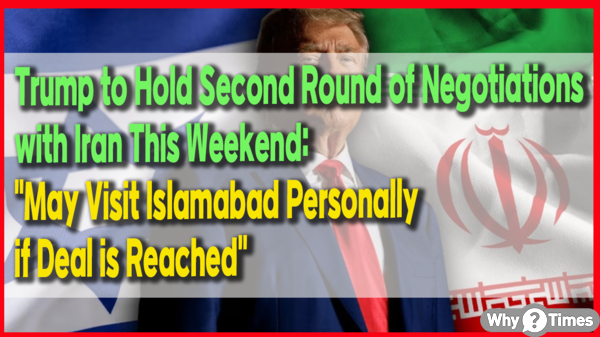
[Trump: "If an Agreement is Reached in Islamabad, I Will Go"]
The final showdown for peace in the Middle East has arrived. U.S. President Donald Trump announced his willingness to personally visit Islamabad, Pakistan, should a nuclear deal with Iran be finalized there. Simultaneously, the U.S. issued a stern warning that it is prepared to resume combat with "unprecedented force" if Tehran rejects the negotiations. Observers note that Iran is virtually compelled to enter ceasefire talks as its domestic economy nears collapse and internal control begins to unravel. Amidst these developments, Israel has abruptly agreed to a ceasefire with Hezbollah in Lebanon.
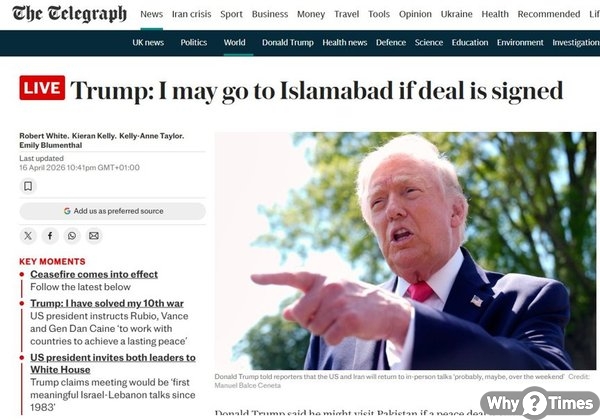
The Telegraph reported on the 17th that President Trump, speaking to reporters on the White House lawn, stated that the U.S. and Iran have reached a consensus on nearly all issues and are very close to a deal. "I might go to Islamabad if a deal is made there. They want me," Trump said. Regarding the timing of the second face-to-face meeting, he suggested an imminent resumption of talks, answering, "Maybe, perhaps, this weekend."
The Trump administration remains optimistic about a potential agreement, and the White House confirmed Pakistan as a leading candidate for the venue. It is highly unusual for a sitting U.S. President to suggest visiting a negotiation site for a nuclear deal, highlighting the administration's intense political will to resolve the conflict.
[U.S. Warns Iran: "Resuming Combat with Unprecedented Power"]
While the atmosphere for a ceasefire ripens, the U.S. Department of Defense (War Department) pressured the Iranian leadership by declaring it would resume military operations at a level "incomparable to before" if peace talks fall through.
Secretary of Defense Pete Hegseth stated during a Pentagon briefing on the 16th (local time) that the U.S. military is fully prepared to resume combat with "stronger force than ever" if Iran does not engage by the end of the current ceasefire. Hegseth emphasized that the U.S. military has rearmed with more sophisticated intelligence and destructive capabilities, growing stronger while Iran was occupied with repairing bombed facilities. He made it clear that "airstrikes on Iran’s power and infrastructure can begin immediately upon President Trump's order."
General Dan Kane, Chairman of the Joint Chiefs of Staff, added a hardline stance: "We will completely cut off Iranian cargo flows across global waters, including the Strait of Hormuz." Kane revealed he has ordered commanders worldwide to track any Iranian-flagged vessels or ships supporting Iran. He warned that the U.S. Navy would blockade both Iranian and international waters, and would not hesitate to board or use force against ships that ignore orders to turn back.
Hegseth further dismissed Iran’s claims of control over the Strait of Hormuz as "piracy" and "terrorism," noting that less than 10% of the U.S. Navy's total strength is sufficient to maintain full passage rights. He pointed out that Iran’s naval power is "virtually annihilated." The Pentagon currently has 16 warships, including carriers and destroyers, enforcing a "reverse blockade" on Iranian ports.
[Iran’s Double-Sided Tactics: Threatening Red Sea Closure while Proposing "Oman Route" Openings]
Under direct U.S. pressure, Iran has publicly threatened to close both the Strait of Hormuz and the Red Sea. However, behind the scenes, Tehran has reportedly proposed opening routes within Omani waters—a classic "carrot and stick" tactic.
Reuters reported on the 16th that Iran proposed guaranteeing free navigation for ships passing through Omani territorial waters near the Musandam Peninsula. This marks a visible concession from Iran's previous hardline stance of claiming sovereignty and charging tolls for the entire strait. Experts interpret this as a move to ease the pressure of the U.S. reverse blockade and open a path for the ceasefire agreement.
However, military threats continue. Major General Ali Abdollahi warned that Iran could close the Red Sea using Houthi rebels in Yemen if the naval blockade continues. Analysts believe Iran is maximizing military tension for leverage while offering practical concessions at the negotiating table.
[The "Two-Month" Deadline: Economic Meltdown and Internal Unrest]
The primary driver behind Iran’s willingness to negotiate appears to be a catastrophic "meltdown" of its economy and a loss of domestic control.
The Telegraph reported that the cumulative physical destruction and blocked import routes since the outbreak of war in February could push the Iranian regime to its economic breaking point within two months. War damage is estimated at $270 billion—exceeding decades of Iran’s projected oil revenue.
With the U.S. Navy blocking the Strait of Hormuz, Iran cannot import raw materials for reconstruction or even basic necessities. Experts predict Iran can only survive two more months without oil exports; if storage facilities reach 100% capacity, oil fields must be shut down, causing permanent economic scarring.
Domestic unrest is also peaking. Iran, which relies on imports for 40% of its food and 70% of its medicine, is facing hyperinflation. Protests are spreading, and there are signs of armed resistance. On the 16th, an anti-government group, "Homeland Guardians," reportedly attacked a military checkpoint in the Qom Province, killing two officers. Furthermore, a high-ranking commander of the Basij militia was recently assassinated near Tehran.
As the U.S. and Israel’s "Epic Fury" operation continues to degrade military and energy infrastructure, the Iranian regime faces a dual crisis of external pressure and internal rebellion. Tehran now stands at a crossroads: accept U.S. terms to release frozen assets for reconstruction, or hold out until the regime collapses.
The recent ceasefire between Israel and Hezbollah is expected to further influence the trajectory of these U.S.-Iran negotiations.


-중국 푸단대학교 한국연구원 객좌교수
-전 EDUIN News 대표
-전 OUR NEWS 대표
-제17대 대통령직인수위원회 정책기획팀장
-전 대통령실 홍보기획비서관
-사단법인 한국가정상담연구소 이사장
-저서: 북한급변사태와 한반도통일, 2012 다시우파다, 선거마케팅, 한국의 정치광고, 국회의원 선거매뉴얼 등 50여권