
Update2026.06.10 (수)

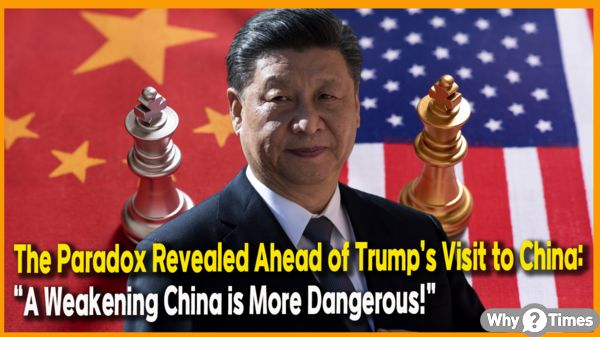
[The Paradox of the ‘Fragile Giant’: A Declining Power is More Dangerous to the World]
As U.S. President Donald Trump visits Beijing for the first time in nine years to hold talks with Xi Jinping, the analysis is gaining traction that the reason China is truly a fearsome presence in the global hegemony race is not because it is strong, but because it is collapsing from within. In reality, the long-standing optimism that the existing U.S.-led order is under threat and that China will become the world's number one economy is far from the truth; rather, the "fragile power" of a China entering a period of decline is causing unprecedented uncertainty for global security. In this regard, pro-China advocates in South Korea need a major awakening.

On the 13th, the New York Times (NYT) published an op-ed by Bret Stephens titled, “China Is Much Weaker Than It Seems. That’s the Problem.” This article was published on the day President Trump left Washington for the U.S.-China summit and is evaluated as presenting the most provocative perspective in the geopolitical discussions surrounding this visit.
In the piece, Bret Stephens argued that at this very moment of Trump’s visit to Beijing, the Western conventional wisdom regarding China is fundamentally wrong. He noted, “When President Trump visits Beijing this week, he may feel a sense of satisfaction in the fact that, in the long run, time is on America's side, but unfortunately, that is exactly the problem.” He pointed out that this is contrary to the common belief that “the U.S. is a ditherer status-quo nation like Britain during the decline of the British Empire, wasting its strength on peripheral wars (South Africa then, Iran now) while failing to respond to an essential strategic and economic competitor (Germany then, China now).” Stephens criticized that “based on these misconceptions, it has been repeatedly claimed that China will soon overtake the U.S. to become the world's largest economy.” In short, while many have argued that the U.S. is the guardian of a fading old order and China is the rising power replacing it, this is a highly flawed perspective.
Stephens continued, “But just as the Soviet Union, Japan, and the European Union (EU), which previously threatened the U.S., all eventually failed, the Chinese economy will never overtake the United States.” Why? Regarding this, Stephens pointed out, “Because history shows that a nation’s most productive assets are political freedom and open markets,” and “The freer, more open, and more competitive it is, the stronger it becomes.”
These claims are not mere ideological optimism. The structural cracks in the Chinese economy are confirmed by figures. Chinese corporate debt has doubled since 2019, while sales have increased by only 30%, and state-owned or mixed-ownership enterprises account for about 60% of China's largest companies. Stephens analyzes that President Xi Jinping's method of pouring massive state capital into robotics, electric vehicles, and batteries is structurally similar to the case where Germany made a huge gamble on renewable energy at the beginning of the century, only to face a boomerang effect in the form of dependence on Russian natural gas.
[Debt, Demographics, and Capital Flight: Three Cracks in the Chinese Economy]
In fact, the fragility of the Chinese economy is multi-layered. The collapse of the real estate bubble is leaving the most serious shockwaves. The proportion of zombie companies in the overall economy has surged from 5% in 2018 to 16% in 2024. Even if the shockwaves from China's collapsed real estate bubble subside, the task of reconstruction will be overwhelming, as it includes not only replacing a major axis of China's economic dynamism but also restoring the financial sense of security of deeply scarred homeowners.
The local government fiscal crisis is also identified as a detonator. The International Monetary Fund (IMF) estimates that the debt of Local Government Financing Vehicles (LGFV), which is not reflected in official statistics, amounts to approximately $8.4 trillion. To solve this problem, the Chinese central government is transferring local debt to the center by issuing special national bonds worth about 440 trillion won over 2024–2025, but this has resulted in a sharp deterioration of the nation's overall fiscal health.
The demographic structure is also a crisis. Aging, declining birth rates, and an increase in net overseas migration are eating away at long-term growth drivers. Added to this are the arbitrary rule of law that makes entrepreneurs tremble, internal distrust created by repeated purges of military leadership, and an aggressive diplomatic line that makes neighboring countries uneasy. In light of the long-standing insight of Joseph S. Nye Jr. (Dean at Harvard) that "one can become a great power only by balancing hard power and soft power," Stephens' diagnosis is that "today's China possesses a 'brittle power' that is too hard and lacks flexibility."
[The Dangerous Gamble of a Declining Power]
Then why is such a China even more dangerous? Stephens places the unique impulse of a declining power at the core of this paradox. A rising power can wait. Such was the China of the Deng Xiaoping and Jiang Zemin eras. However, a power that has entered a downward phase tends to take a gamble before the window of opportunity closes. Just as Putin decided on an invasion under the judgment that Ukraine was being irreversibly incorporated into the Western orbit, the analysis suggests that Xi Jinping may also be strongly tempted by military options regarding Taiwan.
The outlook on the eve of the summit, noted by Chinese-language media, also intersects with this context. Trump’s direct mention of the possibility of a war in the Taiwan Strait just before his visit to China is not mere negotiating rhetoric, but shows that the Taiwan card is emerging as an actual crisis variable. In a complex crisis situation involving tariffs, semiconductors, rare earths, Taiwan, and Iran, the two leaders are more likely to focus on preventing conflict and managing risk rather than a grand bargain in any one area.
In this regard, there are concerns. They must compromise moderately on trade while maintaining a firm stance on alliance defense, and it remains to be seen how discussions on this will proceed. Although unlikely, Stephens warns that if Trump were to trade the $11 billion arms sale commitment to Taiwan for something else like the Iran issue or rare earth supplies in this meeting, it would be decisive evidence of the summit's failure. Our channel's observation is that such a possibility seems low at present. This is because once alliance credibility collapses, it is difficult to restore, and that vacuum is the niche that a Beijing driven by a sense of decline would most actively exploit.
[Conclusion: China is No Longer a Match for the United States]
Finally, Stephens reminds us of the intrinsic strengths of the United States. As Bill Clinton said in his first inaugural address, what is wrong with America can be fixed by what is right with America. The same goes for the problems created by the current administration. However, the same cannot be said for the Chinese Communist Party. This is because the absence of political freedom and self-correction capabilities will hold China back in the long run.
In conclusion, the so-called "Rise of China" theory—that the Chinese economy will soon overtake the U.S. to become number one in the world—has now been revealed as a fiction. History has proven that the most productive national assets come from political freedom and open markets. However, Xi Jinping's China is moving in the exact opposite direction. "Industrial policy," in which the state pours in subsidies to foster specific industries, seems to yield temporary results, but eventually only produces inefficiency and corruption by being swayed by political purposes.
The fact that about 60% of China's large enterprises are state-owned or mixed-ownership clearly shows the rigidity of the Chinese market. It is highly unlikely that companies following the Party's instructions instead of free competition will lead innovation. Moreover, as the real estate bubble bursts, so-called "ghost towns" are appearing one after another, leading directly to a decline in the asset value of ordinary citizens and the fiscal ruin of local governments.
Furthermore, Xi Jinping’s reign of terror is making the situation worse. As the Party's arbitrary judgment takes the place of the rule of law, entrepreneurs have stopped investing and foreign capital is flowing out like an ebb tide. The repeated purges within the military do not symbolize the confidence of the Chinese leadership, but rather a paranoid anxiety. On the outside, it looks strong, but on the inside, it is on the verge of festering and bursting.
A true great power must possess not only the strength to subdue by force (Hard Power) but also the power to attract others (Soft Power). However, current China offers only threats and coercion. A "fragile power" that is only hard and cannot bend flexibly is destined to shatter when it reaches its threshold. The old shell of the Communist Party is unable to handle the dynamism of modern society.
While various conflicts exist within the U.S., America's strength lies in its democratic system that can correct its own mistakes. On the other hand, the Chinese Communist Party has lost the ability to fix itself. A power that cannot heal itself eventually chooses the path of attacking the outside or self-destruction.
Therefore, while firmly confronting China's external expansion, we must maintain strategic patience and a strong security posture to induce their internal contradictions to explode naturally. Solidarity with allies who share the values of freedom is the only way to safeguard the world order from the threat of a China that is collapsing like a giant sandcastle.
Ultimately, the question is becoming not "how strong is China," but "how quickly is China weakening." The speed of decline and the choices Beijing makes in that process will define the future of the world far longer than the results of the Beijing summit.

-중국 푸단대학교 한국연구원 객좌교수
-전 EDUIN News 대표
-전 OUR NEWS 대표
-제17대 대통령직인수위원회 정책기획팀장
-전 대통령실 홍보기획비서관
-사단법인 한국가정상담연구소 이사장
-저서: 북한급변사태와 한반도통일, 2012 다시우파다, 선거마케팅, 한국의 정치광고, 국회의원 선거매뉴얼 등 50여권