
Update2026.06.10 (수)

[Japan’s Indo-Pacific Initiative: A New Variable in Northeast Asian Geopolitics]
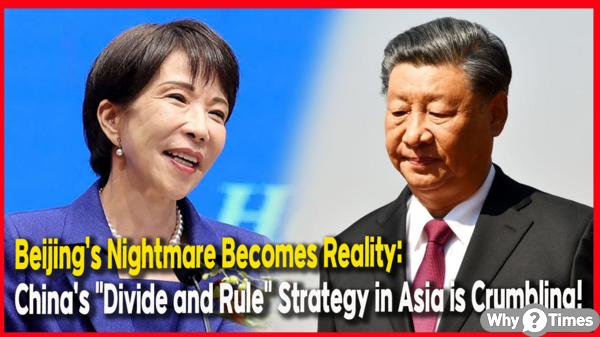
China has been thrown into an uproar once again due to Japanese Prime Minister Sanae Takaichi. This is because what Beijing feared most has finally happened. On the 2nd, during a speech at Vietnam National University, Hanoi, Prime Minister Takaichi declared an "upgraded version of FOIP (Free and Open Indo-Pacific)" encompassing semiconductors, AI, rare earths, energy, undersea cables, and maritime security. This signals the beginning of cracks in the "Divide and Rule" strategy in Asia that Beijing has painstakingly maintained for the past decade, leaving China in a state of delayed shock.

The Global Times, a state-run media outlet that has represented the inner thoughts of the Chinese Communist Party, reported on the 9th: "A spokesperson for the Chinese Ministry of National Defense urged Japanese authorities to stop hypocritical self-glorification regarding Prime Minister Sanae Takaichi’s remarks during her visit to Australia and Vietnam, and to refrain from dangerous military expansion and ambitions for war preparations." The report further noted that "the Japanese government is inciting block conflict and building 'small cliques' under the pretext of a 'free and open Indo-Pacific' and 'security cooperation.'"
There is a reason why China is reacting so strongly and in such panic. China has long employed a single strategy: dealing with Asian countries individually. It used territorial pressure in the South China Sea for Vietnam, military threats for the Philippines, united front tactics for Taiwan, and the "history card" for Japan. China has pursued a long-term strategy of normalizing its dominance across Asia by treating the Taiwan Strait, South China Sea, East China Sea, Korean Peninsula, and Himalayan fronts not as separate issues but as one connected front, thereby dispersing U.S. focus and testing the solidarity of alliances.
However, on May 2nd in Hanoi, that strategy cracked. Akio Yaita, a former Beijing correspondent for Japan’s Sankei Shimbun, asserted, "What Beijing truly fears is not what Takaichi said, but what Japan has actually started to do." Analysis suggests that China’s fury is not a reaction to the content of the speech, but rather close to fear over the fact that Japan has begun moving in earnest as the architect of Asian strategy.
Regarding this, the defense media outlet Second Line of Defense evaluated Prime Minister Takaichi, stating, "Japan no longer intends to settle for being a protected partner. It is intentionally and rapidly becoming a co-designer of the Indo-Pacific order." The Japan Times also analyzed that "this FOIP speech reflects Tokyo’s strategy to check China’s influence while simultaneously offsetting the uncertainty regarding the U.S. that has grown since Trump took office, using its own strength."
[10 Years of Evolution—From Idea to Infrastructure]
Ten years have passed since Shinzo Abe first proposed the FOIP concept in Nairobi, Kenya, in 2016. In the meantime, the COVID-19 pandemic revealed the vulnerability of supply chains, China’s export controls on rare earths turned critical minerals into geopolitical weapons, and conflicts in the Middle East served as a reminder of how thin Japan’s energy buffer is. If Abe’s 2016 speech was an "idea," Takaichi’s 2026 Hanoi speech is an attempt to transform that idea into "infrastructure."
In front of 270 students and experts, Prime Minister Takaichi emphasized, "The environment surrounding us has changed significantly, but the validity of FOIP remains unshaken," and declared, "Japan will take on a much more leading role than in the past." As the three core agendas of the New FOIP, she presented: building an economic ecosystem by strengthening supply chains for energy and critical materials, creating new economic fields and sharing rules through public-private unity, and expanding solidarity in the security field. Takaichi also stated, "Excessive dependence on specific countries for critical materials stems from unfairly low supply conditions," which was widely interpreted as a remark aimed at China.
In response, Bloomberg analyzed that "Prime Minister Takaichi’s choice of Hanoi as the speech venue was itself a strategic choice," because "she could find consensus in a country that opposes China’s maritime sovereignty claims." Bloomberg continued, "While FOIP in the past was closer to the language of diplomacy and security, such as freedom of navigation, the rule of law, and checking China, the FOIP of the Takaichi administration is moving toward an economic security network that combines supply chain reorganization, digital infrastructure, energy security, and the securing of critical minerals." It pointed out that "Vietnam has been positioned as a base for AI and telecommunications corridors, and Australia as a base for energy and critical minerals." Japan has begun to tie the very vulnerable points that China used to pressure each country individually—rare earths, energy, and digital infrastructure—into a single network.
[The Reason for Choosing Hanoi—Striking the Core of the Divide Strategy]
The fact that Prime Minister Takaichi launched the revised FOIP strategy in a Southeast Asian capital, rather than at a multilateral forum or during a visit to a treaty ally, suggests that this initiative directly targets the interests of regional countries as well as Japan’s allies. In fact, Japan is Vietnam's largest donor of Official Development Assistance (ODA) and its third-largest investor, with registered capital reaching $78.6 billion, and the two countries upgraded to a Comprehensive Strategic Partnership in 2023.
Regarding this, the Malay Mail noted, "Although Vietnam has not yet established a formal defense relationship with Japan, it is quietly expanding military cooperation in areas such as maritime security, training, military medicine, and search and rescue following Prime Minister Takaichi’s visit." It added, "At a strategic level, Japan will be satisfied that Vietnam has accepted the FOIP vision, and accordingly, Tokyo is clearly positioning Vietnam as a key regional partner for strengthening supply chain security."
However, Vietnam's position is complex. The General Secretary of the Communist Party of Vietnam visited China in April to sign some 30 cooperation agreements with Xi Jinping and vowed to ease the South China Sea dispute, but in reality, both Vietnam and China have spent the past year expanding South China Sea outposts and strengthening their respective sovereignty claims through land reclamation. Some analyses suggest that Vietnam is expected to carefully balance its position on the revised FOIP, reflecting its sensitivity toward its socialist neighbor and largest trading partner, China. The duality of the Vietnam-China relationship is that they profess to be communist brother countries on the surface while competing for hegemony beneath the surface.
What is noteworthy is that three conditions converged at the 10th anniversary of FOIP: a Vietnamese Prime Minister with deep ties to Japan (Le Minh Hung studied at Saitama University in 1996), geographical conditions featuring the world's 6th largest rare earth reserves and oil and gas production, and the timing of crises like the Middle East conflict and China’s rare earth controls. From Beijing's perspective, there could be no worse combination.
[Strategic Linkage to Australia—The Final Version of Rearmament]
After leaving Vietnam, Prime Minister Takaichi headed straight to Australia. The leaders of both countries reaffirmed a contract finalized in April for the supply of 11 Mogami-class frigates, with the first three scheduled for delivery in 2029. For Australia, this contract is part of a large-scale military buildup; the frigates feature a maximum range of 10,000 nautical miles, a 32-cell vertical launch system, and anti-air/anti-ship missiles. The $7 billion (approx. 10 trillion won) warship supply contract signed on April 18 was the largest military deal since Tokyo lifted its arms export ban in 2014.
Second Line of Defense analyzed that "Prime Minister Takaichi’s visit to Australia is not mere ceremonial diplomacy but an operational expression of a new strategic logic," adding, "A defense architecture consisting of hypersonic defense layers, drones, and F-35 sensor fusion is far more reliable than any structure the U.S. can maintain alone across three oceans."
[Beijing’s Furious Counterattack—The Raw Face of Indignation]
China's response was immediate and intense. Chinese Foreign Ministry spokesperson Lin Jian stated in an official briefing, "Exchanges between countries should not target third parties or harm their interests," and criticized that "Japan is shouting the slogan 'free and open' but is actually inciting camp confrontation and trying to create exclusive small groups."
Colonel Zhang Bin, a spokesperson for the Chinese Ministry of National Defense, also strongly condemned Japan, saying, "Japanese authorities are inciting camp confrontation and building 'small factions,' which is an act that undermines the strategic security interests of other countries and serves as a pretext for Japan to break free from constraints on military development." China did not stop there and publicly expressed "strong dissatisfaction" with the security cooperation between Japan and the Philippines.
These remarks are an extension of the diplomatic conflict between China and Japan that has intensified since Prime Minister Takaichi’s statement last November that "a Chinese attack on Taiwan could constitute a crisis for Japan’s existence."
Regarding this, the Global Times quoted Xiang Haoyu, a researcher at the China Institute of International Studies, saying, "In the past, the Indo-Pacific cooperation framework was centered on the U.S., and Japan was just one part of it, but now Western media are noting that Japan is 'intentionally and rapidly becoming a co-designer of the Indo-Pacific order.'" Although written as a critique, this sentence reveals that Beijing already views Japan as an independent strategic actor rather than a junior partner of the U.S.
Akio Yaita pointed out, "What China truly fears is not what Takaichi said, but what Japan has actually started to do." China has induced countries to face it one-on-one while remaining isolated through a divide-and-rule strategy. However, Takaichi’s New FOIP is an attempt to collapse Beijing’s core strategy by forming an "Indo-Pacific community" that ties Japan, Vietnam, the Philippines, ASEAN, the U.S., and Australia into a single framework of energy, AI, maritime security, and supply chains.
Akio Yaita finally concluded, "In the flow leading from the late former Prime Minister Shinzo Abe to current Prime Minister Sanae Takaichi, Japanese diplomacy is completing a historic transformation. Japan is no longer a follower of the U.S. but is emerging as an architect of the Indo-Pacific strategy." In short, the angrier China gets, the more it proves that Takaichi said the right things in Hanoi.
Regarding this, Breaking Defense analyzed that "Prime Minister Takaichi’s most decisive general election victory among all past Japanese Prime Ministers has made possible what Japanese leaders could not do for decades"—fundamentally readjusting Japan’s security posture.
If Abe planted the seeds in Nairobi 10 years ago, Takaichi made them bloom in Hanoi with the security language of the 21st century: semiconductors, AI, rare earths, and undersea cables. The divide-and-rule structure in Asia that China designed for so long is now being challenged at its most vulnerable point. Beijing’s nightmare has become reality, and that reality has only just begun.

-중국 푸단대학교 한국연구원 객좌교수
-전 EDUIN News 대표
-전 OUR NEWS 대표
-제17대 대통령직인수위원회 정책기획팀장
-전 대통령실 홍보기획비서관
-사단법인 한국가정상담연구소 이사장
-저서: 북한급변사태와 한반도통일, 2012 다시우파다, 선거마케팅, 한국의 정치광고, 국회의원 선거매뉴얼 등 50여권